
Tuition keeps going up. Rent near campus isn’t getting any cheaper. And your meal plan definitely won’t pay for those late-night pizza runs.
If you’re looking for ways to make money as a college student, you’re in good company. A huge number of undergraduates across the U.S. work at least part-time while they’re in school.
The good news is you don’t have to sacrifice your GPA to earn extra cash. Plenty of jobs fit around lectures, exam weeks, and everything else college throws at you. Some pay by the hour. Others let you work whenever you have time, whether that’s between classes or from your dorm late at night.
You’ll find a mix of on-campus jobs, online gigs, and side hustles below. I’ve also included the tax and financial aid details that most “make money fast” articles completely skip, so you can choose something that fits your schedule, skills, and long-term goals.
Table of Contents
Why so many students are looking for ways to make money as a college student
The numbers explain a lot. According to the National Center for Education Statistics, a large share of full-time undergraduate students in the U.S. work while enrolled, with many putting in around 15 to 25 hours each week.
Students usually start earning extra money for a few common reasons:
- Paying for rent, groceries, or transportation that financial aid doesn’t cover.
- Cutting down how much they need to borrow through student loans.
- Building experience that actually looks good on a résumé before graduation.
- Paying for travel, hobbies, or weekends out without asking parents for money.
Finding any job isn’t enough. You want one that fits your class schedule, your skills, and the amount of energy you realistically have each week.

How to balance different ways to make money as a college student without hurting your GPA
This question comes up everywhere, from academic advisors to parents to Reddit threads. The answer is pretty simple: choose work with flexible, predictable hours and stay away from jobs that suddenly expect more of you during midterms or finals.
A few habits make a huge difference:
- Keep your work schedule reasonable: Limit your hours to around 15 to 20 per week during the semester. Research highlighted by the Georgetown University Center on Education and the Workforce consistently shows that working longer hours can negatively impact a student’s academic performance.
- Pick jobs with predictable schedules: Campus jobs and remote freelance work are usually much easier to manage than retail shifts that change every week.
- Leverage academic breaks: Take on bigger earning opportunities during winter break or summer instead of trying to squeeze them into finals season.
- Prioritize your coursework: Block out study time on your calendar before you agree to regular shifts.
Once you’ve got that balance figured out, here are some of the best ways to earn money.
1. On-Campus Jobs (The Most Underrated Option)
For many students, on-campus jobs are one of the easiest ways to make money as a college student. The biggest advantage is simple: your employer already understands that classes come first.
Some of the most common campus jobs include:
- Library assistant or circulation desk staff
- Resident Assistant (RA), often with free or discounted housing
- Campus tour guide or admissions ambassador
- Dining hall or campus café staff
- IT help desk technician
- Research assistant for a professor (paid or for-credit with a stipend)
- Tutoring center or writing center staff
One of the biggest perks is flexibility. If you have an exam, campus supervisors usually understand. Many campus offices also close during school breaks, so you’re far less likely to get last-minute messages asking you to cover someone’s shift during finals week.
- Pay range: $11 to $18 per hour. RA positions and research assistant roles can also include housing credits or stipends that make the overall compensation much better than the hourly wage suggests.
A mistake I see all the time is students assuming campus hiring only happens in September. It doesn’t. Students graduate, study abroad, or reduce their hours throughout the year, so new openings appear regularly. Check your university’s career portal every month instead of only during the first few weeks of the semester.
2. Federal Work-Study (If You Qualify)
If you completed the FAFSA, take another look at your financial aid award letter. You might already qualify for Federal Work-Study.
This need-based federal aid program helps fund part-time jobs (usually around 10 to 15 hours each week) paying at least the federal minimum wage. Work-study positions are typically located on campus, though some opportunities are hosted by approved local nonprofits or government organizations.
Another major benefit is that work-study earnings generally don’t reduce next year’s financial aid calculation, receiving much more favorable treatment than regular, off-campus income.
Talk to your financial aid office as early as you can. Work-study funding is limited, and many schools award available positions on a first-come, first-served basis, even if you’re already eligible.

3. Freelancing and Remote Gig Work
If you are looking for digital ways to make money as a college student, freelancing and remote gig work fit really well around university life. You decide when you work, how many projects you take on, and whether you want to work from your dorm, the library, or a coffee shop between classes.
Students often get started with work like:
- Writing or editing for blogs, newsletters, or small businesses.
- Designing logos, social media graphics, or simple websites.
- Editing short-form video content using the best video editing app for iPhone.
- Virtual assistant work, including inbox management, scheduling, and data entry.
- Helping content creators brainstorm strategy or make money on Instagram Reels.
Your first few projects probably won’t pay as much as you’d like, and that’s normal. Most student freelancers build a small portfolio first, usually with 3 to 5 sample projects. Some even start by helping a friend’s small business before landing paid clients.
One mistake trips up a lot of beginners. They charge so little that clients question the quality of the work, then they accept too many projects trying to make up the difference. Decide how many hours you can realistically work each week before you start saying yes to clients.

4. Tutoring and Academic Support
Tutoring and academic support continue to be some of the best-paying, flexible ways to make money as a college student. If you’re doing well in a subject, chances are someone else needs help with it.
Here are a few places to start:
- Peer tutoring through your university’s academic support center.
- Private tutoring platforms that connect tutors with high school and college students.
- Subject-specific tutoring—especially in calculus, organic chemistry, statistics, and foreign languages, where demand is usually higher.
- SAT, ACT, or GRE test prep tutoring if you scored well yourself.
- Pay range: $15 to $40 per hour, depending on the subject and the platform. Private tutoring often pays more than campus tutoring programs.
A simple tip that many students overlook is asking your department whether they keep a list of approved tutors. Getting your name on that list can bring in new students without any extra marketing.
5. Selling Skills or Products Online
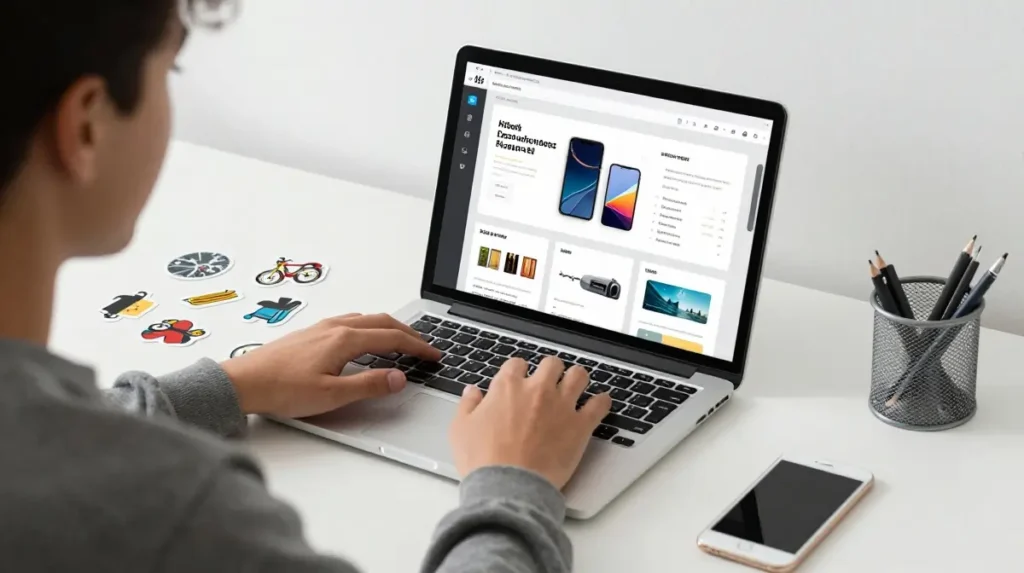
When looking for creative ways to make money as a college student, selling skills or products online is a fantastic avenue. Client work isn’t the only way to earn money online; some students build highly profitable digital assets.
Popular options include:
- Designing print-on-demand products, stickers, or launching a niche YouTube channel creating viral AI ASMR eating videos for social platforms.
- Reselling thrifted clothing or used textbooks. (Pro-tip: check your campus bookstore’s buyback prices before selling elsewhere because they’re sometimes better than you’d expect).
- Selling stock photos or design templates through online marketplaces.
- Selling notes or study guides through note-sharing platforms. (Be sure to check your university’s academic integrity policy first, as some schools strictly prohibit this).
The income usually starts slowly, but these ideas have one big advantage. Once you’ve built a digital product, you don’t always have to spend more hours to make more money. That’s especially helpful during semesters when you’re already carrying 15 or more credit hours.
6. Part-Time Off-Campus Jobs
Retail stores, restaurants, and coffee shops are still solid choices if you need income quickly. You can usually start earning much faster than you would building a freelance business from scratch.
Students often have good experiences working at:
- Coffee shops and cafés, where student employees can often swap shifts easily.
- Retail stores near campus that regularly hire college students.
- Restaurants, where tips can significantly increase your hourly earnings.
- Fitness studios or gyms that include a free membership as part of the job.
Before accepting an offer, ask one simple question: “How do you usually handle exam weeks for college students?”
The manager’s answer tells you a lot. If they’ve worked with students before, they’ll probably have a clear answer. If they hesitate or seem unsure, scheduling could become a major headache later in the semester.

7. Gig Economy and App-Based Work
App-based delivery and gig-economy tasks are highly flexible ways to make money as a college student because you control your schedule. You decide when to log in, when to stop, and how often you want to work.
Some of the better options for students include:
- Food or grocery delivery apps, especially during dinner hours around campus.
- Task-based apps for furniture assembly, moving help, or yard work.
- Rideshare driving if you have a qualifying vehicle, insurance, and meet the platform’s age requirements (many require drivers to be at least 21).
One thing to keep in mind is that the advertised hourly earnings don’t always tell the full story. Gas, vehicle maintenance, insurance, and platform fees all reduce what you actually take home.
These apps usually work best when they’re part of your overall income plan instead of your only source of income. You’ll also earn more by working during busy periods like weekend evenings, football game days, and campus move-in or move-out weeks.
Common mistakes students make when trying to find ways to make money as a college student
A few mistakes come up again and again, and they’re easy to avoid once you know what to watch for:
- Overcommitting: Trying to manage too many income streams at the same time. Two dependable sources usually work much better than juggling 5 inconsistent ones.
- Procrastinating on scheduling: Waiting until classes begin before thinking about scheduling conflicts. Get your class timetable locked in before committing to recurring work shifts.
- Underpricing freelance rates: Charging too little for freelance work because you’re worried about losing clients, then taking on far too much work to make the numbers add up.
- Ignoring deductions: Forgetting to track business expenses like gas, software subscriptions, or supplies that could qualify as deductions if you’re self-employed.
- Ignoring financial aid impacts: Keeping your financial aid office in the dark about new income. A quick email today can prevent unpleasant surprises when it’s time to renew your aid.
FAQ: Making money as a college student
What is the easiest of all ways to make money as a college student?
On-campus jobs and Federal Work-Study positions are usually the easiest to balance with college life. Campus employers already understand exam schedules, class changes, and semester breaks, so they’re generally much more flexible than off-campus employers.
Can international students work and earn money in the U.S.?
Yes, but there are rules. Students with an F-1 visa can generally work on campus for up to 20 hours per week during the semester. Off-campus employment usually requires specific authorization, such as CPT or OPT. Check with your school’s international student office before accepting any job.
How many hours a week should a student work?
Most academic advisors recommend keeping work hours between 15 and 20 each week during the semester. That balance usually gives you enough time for classes, studying, and some breathing room. You can always work more hours during winter break or summer if you need extra income.
Do I have to pay taxes on money I make as a student?
Yes. If your total income is above IRS filing thresholds, you’ll generally need to file a tax return. Freelance and gig workers with more than $400 in net earnings usually have self-employment tax responsibilities as well, which you can learn more about on the IRS website.
What’s a good side hustle for a student with no experience?
Campus jobs are a great place to start because they rarely require previous experience. Tutoring subjects you’re already good at, entry-level freelance work like data entry or social media scheduling, and simple design projects are also beginner-friendly ways to build skills while earning money.
Final Thoughts
The best ways to make money as a college student depend on your class schedule, your major, and how much flexibility you need during the semester.
I’d start with one dependable income source, usually an on-campus job or a Federal Work-Study position if you’re eligible. Once you’ve settled into your routine, you can add something more flexible, like tutoring or freelancing, without stretching yourself too thin.
Students who manage money well in college usually have one thing in common. They build their work schedule around their classes instead of trying to squeeze classes around work.
Your next step is simple. Check your university’s career portal and visit your financial aid office this week. New campus jobs and Work-Study openings appear throughout the year, and applying early gives you a much better chance of landing the flexible positions everyone wants.
1 thought on “7 Best Ways to Make Money as a College Student in 2026 (Realistic & Flexible)”